
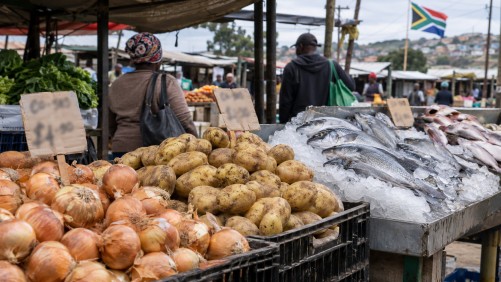
South African consumers are grappling with rising prices for everyday food items, particularly vegetables and seafood, as reported by the latest Consumer Price Index (CPI) figures for October 2026. The annual inflation rate for food and non-alcoholic beverages has increased for the third consecutive month, reaching 1.4% in October. Despite the relatively low overall food inflation, certain grocery staples have seen significant price hikes over the past year.
Vegetable prices have surged, with an annual inflation rate of 8.1% in October, up from 3.5% in September. Onions have become 53.6% more expensive over the year, marking one of the sharpest increases. Potatoes and tomatoes have also seen notable price rises, with increases of 14.9% and 13.2% respectively. Cabbage prices have climbed by 12.1%.
Fish and seafood prices have not been spared, recording an annual inflation rate of 8.4%, which adds further strain to household grocery budgets. Sugar products have also experienced price increases, with white sugar going up by 3.2% and brown sugar by 2.7% during October.
However, there is some relief for consumers as certain staple foods have become cheaper. Maize meal prices have dropped by 9% compared to the previous year, while white rice prices have fallen by 7.3% and brown bread by 0.8%. The meat sector has also seen a slowdown in inflation, with an overall rate of just 0.2% in October. Notably, stewing beef prices have decreased by 7.7% annually, and beef mince and beef steak have become 4.5% and 4.1% cheaper, respectively.
These figures underscore the evolving trends in food prices across South Africa, where the rising costs of vegetables and seafood are being somewhat offset by reductions in staple food and meat prices. This dynamic is placing varying levels of pressure on different aspects of household grocery expenditures.