
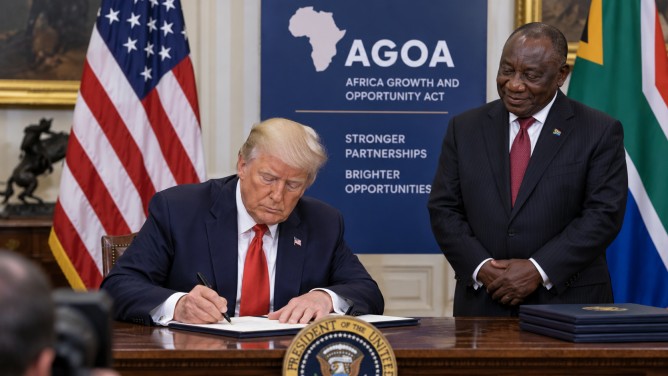
In a significant development for trade relations between the United States and sub-Saharan Africa, President Donald Trump signed legislation extending the African Growth and Opportunity Act (AGOA) until December 31, 2028. This move alleviates immediate concerns about the future of the trade programme, which allows eligible African countries preferential access to the US market, primarily through duty-free treatment for qualifying products. Established in 2000, AGOA aims to promote economic growth, investment, and strengthen trade ties between the US and Africa.
The extension of AGOA provides a sense of stability for exporters in sub-Saharan Africa after a period of uncertainty surrounding the programme’s future. The legislation passed through Congress without significant policy alterations, reflecting continued support for the initiative. This extension is particularly crucial for South Africa, which had faced concerns over its eligibility. Discussions among US officials and lawmakers had previously raised the possibility of altering Pretoria’s status or removing it from the programme altogether, which could have led to increased trade barriers for South African exporters.
For now, the two-year extension ensures that South African businesses, along with other eligible African exporters, have additional time to plan their trade activities with the US. By maintaining the current framework through the end of 2028, the extension temporarily removes the threat of losing AGOA benefits, offering a period of certainty and stability.
However, this extension does not conclude the conversation about the future of US-Africa trade relations. The Trump administration retains the possibility of contemplating broader changes to AGOA or adjusting its application to individual countries before the new expiration date. This suggests that while the immediate risks have been mitigated, longer-term discussions and potential policy shifts could still be on the horizon.