
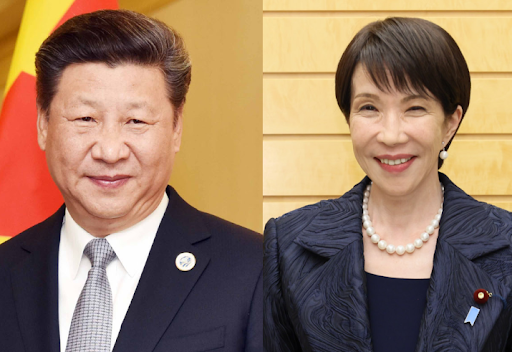
The strategic ambiguity that has characterized Japan’s position on Taiwan for over five decades is proving increasingly untenable as China demands explicit commitment to the “One China” principle and domestic security concerns in Japan prompt more forthright discussion of potential military scenarios. Prime Minister Sanae Takaichi’s willingness to characterize Chinese military action against Taiwan as a potential “survival-threatening situation” for Japan represents a significant departure from the careful diplomatic language that has traditionally characterized Japanese policy.
This evolution reflects changing regional security dynamics that make historical ambiguity more difficult to maintain. The 1972 joint statement’s formulation—where Japan stated it “fully understands and respects” China’s territorial claims without explicitly endorsing them—provided useful flexibility when regional military capabilities and tensions were fundamentally different. However, increased Chinese military activities near Taiwan and growing Japanese security concerns create domestic political pressure for more explicit policy positions.
The economic costs of abandoning strategic ambiguity are becoming apparent. China has responded to Takaichi’s statements with comprehensive pressure including travel advisories that threaten tourism losses of approximately $11.5 billion, postponed cultural events, continued seafood import bans, and implicit threats regarding rare earth exports. With over 8 million Chinese visitors in the first ten months of this year representing 23% of all arrivals, the tourism impact alone could reduce Japan’s annual economic growth by 0.3 percentage points according to economist Takahide Kiuchi’s projections.
However, maintaining strategic ambiguity also carries costs in terms of alliance management and domestic political credibility. Japanese security constituencies view clarity about potential responses to Taiwan scenarios as important for deterrence and coordination with the United States and other regional partners. The tension between these domestic security concerns and the economic benefits of maintaining ambiguous positions creates difficult tradeoffs for Japanese policymakers.
International relations experts suggest that the era of strategic ambiguity may be ending regardless of current diplomatic costs. Sheila A. Smith notes that domestic political constraints make it difficult for leaders to appear ambiguous on issues viewed as fundamental to national security, while Professor Liu Jiangyong indicates China will implement countermeasures gradually to pressure Japan back toward ambiguity. The fundamental question is whether the regional security environment will permit continued ambiguity or whether Japan will face mounting pressure from both security and economic perspectives to adopt more explicit positions, potentially requiring fundamental reassessment of the diplomatic framework established in 1972 that has governed bilateral relations for over five decades.