
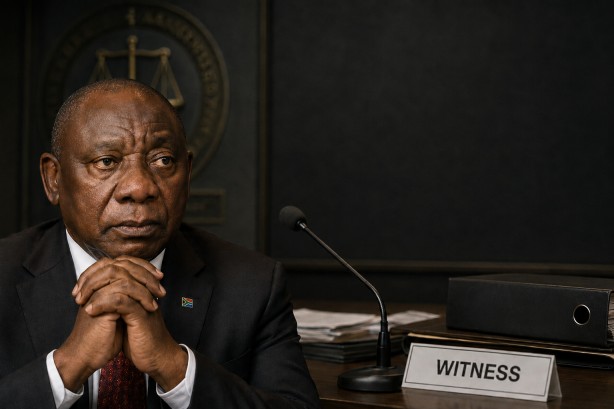
During the proceedings of the Madlanga Commission, Vusimuzi “Cat” Matlala’s testimony brought South African President Cyril Ramaphosa’s name into the spotlight. The commission is scrutinizing confidential information that Matlala allegedly conveyed to high-ranking police officials. Central to the inquiry was a document containing personal details purportedly associated with Ramaphosa, which Matlala was questioned about. Previously, it was disclosed that Matlala had forwarded this document to former KwaZulu-Natal Hawks head, Major-General Lesetja Senona, after obtaining it from private investigator Calvin Rafadi. In his defense, Matlala asserted that he merely passed on the information without knowledge of its content or source, and his statements did not suggest any wrongdoing by Ramaphosa.
The dynamics between Matlala and Senona were also under the commission’s lens. Matlala characterized his relationship with Senona as akin to having an “older brother.” He recounted an incident where Senona lent him R20,000 following a police raid on his Pretoria property in December 2024. This particular detail added another layer to understanding the connections and interactions among individuals involved in the ongoing investigation.
Moreover, Matlala leveled accusations against the suspended Deputy National Police Commissioner, Lieutenant-General Shadrack Sibiya. He alleged that Sergeant Fannie Nkosi served as a conduit for collecting money from various individuals in Gauteng. However, when pressed for details on those individuals’ identities, Matlala exercised his right against self-incrimination, citing ongoing separate criminal proceedings against him as a reason for his refusal to disclose further information.
The broader context of these hearings is the Madlanga Commission’s mandate to investigate serious allegations of corruption, criminal activities, and political interference within South Africa’s criminal justice system. The testimonies and evidence presented aim to shed light on the intricate and often opaque interactions between officials and other actors within this system. Despite the complexity of the case, significant emphasis is being placed on uncovering the truth behind these allegations to restore integrity and public trust in the justice system.