
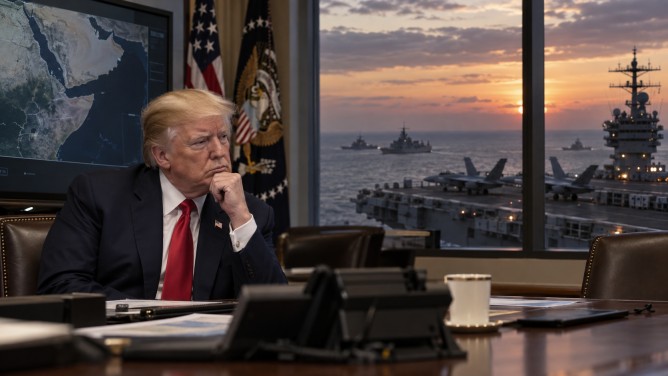
The decision to delay US military strikes against Iran-backed Houthi targets in Yemen underscores the complexity of American involvement in the Middle East and its potential impact on global stability and energy supplies. As tensions threaten to escalate, the United States must weigh its options carefully, considering both strategic interests and resource constraints.
The Trump administration, after extensive military preparations, opted to temporarily hold off on launching airstrikes. This decision came despite initial plans to intervene following discussions between President Donald Trump and Saudi Crown Prince Mohammed bin Salman. The Saudi government had urged the US to act against the Houthis, who have ramped up attacks on Saudi interests, creating a volatile situation in the region.
Military readiness included finalized target lists and prepared US warplanes, illustrating the seriousness of the proposed intervention. Yet, some US officials expressed concern that opening a new military front against the Houthis could overextend American military resources, already heavily engaged in the broader conflict involving Iran.
The Houthis have long been fighting Yemen’s internationally recognized government, backed by Saudi Arabia. The conflict recently intensified, raising alarms about security threats in critical maritime areas such as the Red Sea and the Bab al-Mandab Strait. This escalation poses risks to regional security and could disrupt global energy supplies, given the significance of these waterways in international oil trade.
While airstrikes were considered a potential pressure tactic against the Houthis, questions remain about their effectiveness in achieving a lasting resolution. Previous military efforts have not successfully coerced the Houthis into altering their stance, highlighting the challenges of using military force as a solution in complex geopolitical conflicts.