
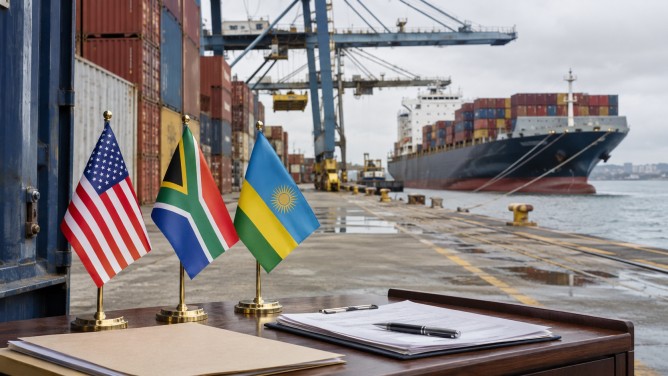
The Trump administration’s decision to suspend South Africa and Rwanda from the African Growth and Opportunity Act (AGOA) threatens to significantly disrupt their trade relationship with the United States. This move, announced by US Trade Representative Jamieson Greer, cites both countries’ failure to meet AGOA eligibility requirements, a setback that could impact their economic ties with Washington.
AGOA is designed to provide eligible African nations with duty-free access to the American market for a wide array of products, thereby boosting exports, investment, and economic development. The suspension of South Africa, a key beneficiary, might have substantial repercussions for its exporters who rely heavily on this preferential access.
The US administration has raised concerns over trade barriers and practices in South Africa and Rwanda that it deems inconsistent with American national security and foreign policy interests. These include issues related to governance, human rights, and the rule of law, with particular criticism directed at Rwanda over trade restrictions.
Added to the tension are the criticisms from President Donald Trump’s administration targeting South Africa’s domestic policies, including allegations of discrimination against white communities—claims firmly denied by the South African government. As a result, the proposed suspension could introduce uncertainty for businesses dependent on favorable trade conditions with the US.
This development underscores the growing strain in bilateral relations between Washington and Pretoria, exacerbating existing tensions over policy disagreements. For both South Africa and Rwanda, the suspension from the AGOA programme signals a potential shift in economic interactions with the United States, prompting concerns over future trade prospects.