
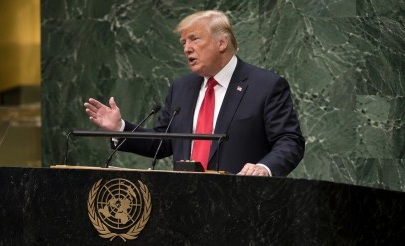
The proposal by US President Donald Trump to rebrand artificial intelligence as “super intelligence” could reshape perceptions and policy directions regarding this rapidly advancing technology. This change, announced during Trump’s address at the United Nations General Assembly in New York, underscores his administration’s push to emphasize the potential of AI technologies, portraying them as more powerful than the current terminology suggests.
President Trump argued that the adjective “artificial” underestimates the technological capabilities of AI, advocating instead for “super intelligence” in future governmental documentation. This move comes amidst ongoing debates among governments and tech companies on how best to manage AI’s growing capabilities. Trump dismissed the potential dangers of AI as overblown, rejecting international calls for stringent global controls on the technology. He emphasized that AI could drive economic growth on a scale comparable to previous technological revolutions.
Contrary to recent appeals by over 20 political leaders for increased international cooperation and the establishment of common safety standards for AI, Trump maintained that the United States would not back a global oversight system. Instead, he proposed the creation of an “AI Force” and the appointment of an AI czar to oversee AI initiatives within the country, though details on the operational structure of this proposal remain sparse.
In AI research circles, “superintelligence” typically refers to a hypothetical system with intellectual capabilities far exceeding human performance across various tasks. Trump’s broader application of the term to all artificial intelligence could lead to shifts in public and policy perspectives on the technology.
As the conversation around AI continues to evolve, Trump’s proposals highlight a distinct approach that prioritizes national development and economic impact over international regulatory frameworks. This stance will likely shape the United States’ role in the global AI landscape in the coming years.