
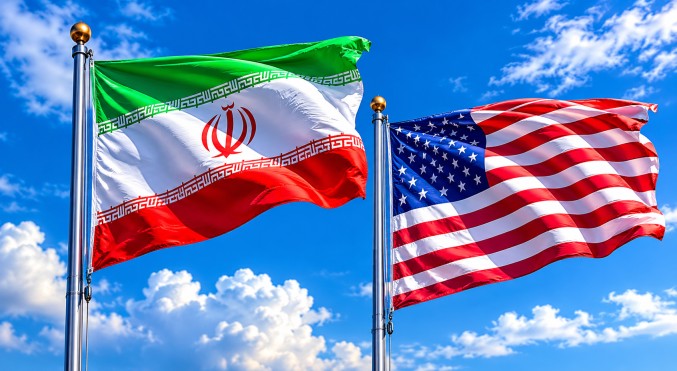
Amid heightened tensions over potential renewed American military actions, Iran and the United States have indicated limited advancement in their ongoing negotiations. Recent discussions have seen a narrowing of differences, with both sides concentrating on achieving a broader ceasefire and mitigating regional tensions. Iran’s Foreign Ministry spokesperson, Esmail Baghaei, emphasized that the priority of these talks is to halt hostilities, with nuclear issues set to be tackled subsequently.
U.S. Secretary of State Marco Rubio has acknowledged progress in the diplomatic discussions, highlighting that these efforts are ongoing and may lead to further developments soon. Washington’s stance remains firm on preventing Iran from obtaining nuclear weapons and insists on securing guarantees concerning uranium stockpiles and the reopening of the Strait of Hormuz.
In response to the situation, Iran’s parliamentary speaker, Mohammad Bagher Ghalibaf, cautioned that any renewed attacks by the U.S. would provoke a robust Iranian retaliation. He mentioned that Iran has been reconstructing parts of its military capabilities following recent conflicts and a fragile ceasefire.
Pakistan is playing a mediating role between Tehran and Washington, with Pakistan’s army chief engaging in talks with Iran’s top leadership in Tehran. The discussions have been described as constructive, with the aim of preparing for another round of direct negotiations between the two nations.
These diplomatic efforts are taking place amid growing concerns over regional stability, the security of global energy supplies, and the potential for further escalation in the Middle East. As both nations attempt to navigate these complex issues, the international community watches closely, hoping for a peaceful resolution.