
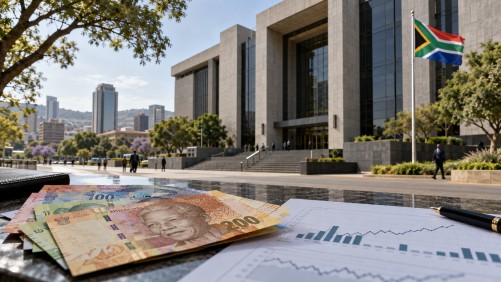
Borrowing costs for South African households and businesses are set to climb following a decision by the South African Reserve Bank (SARB) to increase its benchmark repo rate by 25 basis points to 7.25%. This adjustment also raises the prime lending rate to 10.75%, impacting particularly those with variable interest rate loans. The move, approved unanimously by the Monetary Policy Committee (MPC), comes amid ongoing concerns about inflation and rising fuel prices.
The SARB’s decision reflects its response to renewed pressures from fuel prices, which have been a significant concern for the central bank. After a period of easing between June and August, petrol prices have again surged, with an average under-recovery of R2.83 per litre. This situation raises the likelihood of further increases at the pump, which could cascade into higher costs across transport, logistics, and manufacturing sectors, further squeezing household budgets.
While fuel prices are on the rise, food inflation has seen a decline, providing some relief to consumers. Prices are at their lowest level since 2010, thanks to strong harvests and stable meat prices which have helped to curb food-related inflation pressures.
South Africa’s economic landscape presents additional challenges, with the economy contracting by 0.2% in the second quarter. Despite this setback, the SARB remains optimistic about a recovery in the latter half of the year, projecting an annual growth rate of 1.2% and a medium-term growth outlook of around 2%.
Inflation is anticipated to exceed 5% later this year and into early 2027 before gradually reducing to around 3% by the end of that year, according to the central bank. As interest rates stabilize for the remainder of the year, future monetary policy decisions will hinge on economic data, inflation trends, and the balance of risks. The next MPC meeting is slated for 19 November 2026.